


Exploring Classic Chablis - The Original American Cult White Wine
For forty years, Chardonnays have either been the number one, two, or three favorite wines to drink in the U.S. You'd think people would flock to Chardonnay tastings wherever they are offered, but you'd think wrong.
It's too bad, really, that the Anything But Chardonnay crowd isn't aware of all the exciting new talent fashioning the latest generation of Chardonnays, because they are pretty exceptional wines. Chardonnay is a classic for a reason. It deserves to be appreciated.
There is no better place to re-discover Chardonnay's greatness than to go to its source: the French wine region of Burgundy, specifically its northernmost part, the cool-climate, limestone-rich appellation called Chablis.
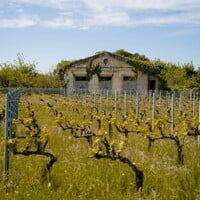
I was on a Chablis wine tour one chilly May morning, and as I looked around, the land was dusted with white, prompting me to ask, "Did it snow last night?"
The white dirt I was looking at was the famous Chablisienne chalk created by millions-of-years-old decomposed oyster shells from the Jurassic era, the same ancient seabed also found in Champagne and Sancerre in the Loire Valley. Combined with the cool climate of this French zone, grapes from Chablis (solely Chardonnay) provide the unique tangy and persistent flavors that make their wines unequalled in the world. It's called Kimmeridgian soil.
Kimmeridgian soil, I have to remind myself, is a mixture of limestone, clay and fossilized oyster shells. Chablis is loaded with it, and it is where Chardonnay made the original cult white wine.
Chablis Confusion
Chablis must have been a popular wine to connoisseurs in nineteenth century America. Have you ever wondered why early American vintners stole the name "Chablis" to promote their white wines, even though they were most certainly not made from Chardonnay, as is the case in true Chablis? It had to be famous enough to be worthy of imitation.
I would speculate that before the era of stainless-steel fermentation and refrigerated shipping containers, Chablis survived the ocean voyages better than other Burgundian Chardonnays because of its firm structure and ramrod acidity which could only come from this particular cool growing region and its special soils. It earned its fame because it deserved it.
We have now joined the rest of the world in honoring and protecting European place-names when identifying their wines, so no new wineries in America can produce a wine called "Chablis" from grapes grown in America. Regrettably, a handful of legacy brands were excepted from this rule, "grandfathered" so they can keep up this dishonest and confusing charade. They are sold in jugs and boxes containing who-knows-what cheap varieties (Colombard, Thompson Seedless) in stores all over the country, and American wine consumers are understandably confused.
New wine consumers understandably ask why they should pay more for true Chablis than for so-called "California Chablis." It's unconscionable, it still confuses people, and the practice should stop. In my opinion, that confusion has resulted in less demand for true Chablis over the years. While connoisseurs have driven up the prices of Meursault and Puligny Montrachet into three figures, Chablis is relatively inexpensive, starting in the mid twenty-dollar range.
This is a great time to get into real Chablis, before the world gets hip to these fabulous wines and prices skyrocket.
The Chablis Region

As mentioned before, Chablis is a growing region quite separate and distinct from the rest of Burgundy. Because it is the northernmost subregion of Burgundy, 70 or 80 miles northwest of the Côte d'Or, the Chardonnay grown there has equally distinctive characteristics.
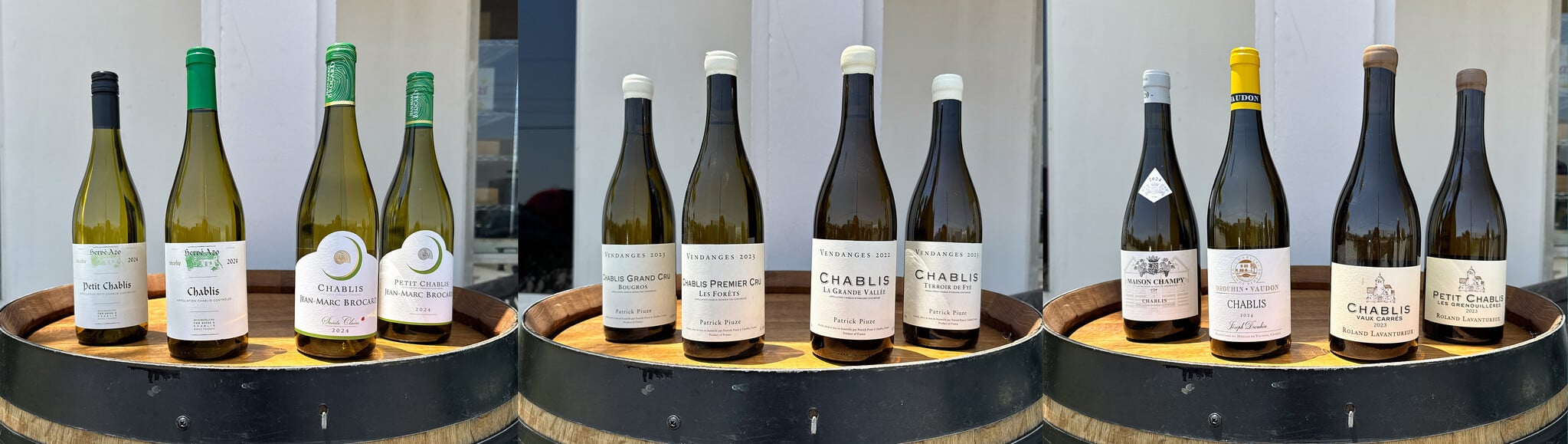
There are four classes of Chablis wine: Petit Chablis, Chablis, Chablis Premier Cru and Chablis Grand Cru.
- Petit Chablis comes from the flatter vineyards above and below the hillsides.
- Chablis, the village wine, can come from anywhere within the Chablis appellation, typically on hillsides.
- Chablis Premier Cru comes from exceptional hillside vineyards.
- Chablis Grand Cru (there are just seven vineyards) are contiguous on one particular hillside north of the village.
Enjoying Chablis
Today, most Chablis sees no oak, so you really are experiencing true terroir, the taste of the place, with its zesty, tangy and sometimes bread dough flavors that are unique in the world of Chardonnay. Some Premier Cru and Grand Cru Chablis may be barrel fermented and/or aged in oak barriques. They generally have more weight in the mouth, and are wines of greater aspiration. And they, naturally are rarer and more expensive.
Chablis will restore your faith in Chardonnay, perhaps getting you back to the Chardonnay fold. It's a classic for a reason.
Remember, Chablis is made from grapes grown in soil made from ancient oyster shells. It's no wonder these wines should taste so good with just about any fish pulled from the sea, especially shellfish, especially clams, clam chowder and oysters.
Amazing, isn't it?