



The Joy of German Riesling
I'm almost afraid to tell you this story, seeing how the latest trend in German Riesling is to make wines from their best vineyards dry to adapt to current consumer tastes. These days just hearing the term "sweet wine" gives a lot of our customers the shivers.

"What's going on?" cried one of our customers when he heard of this trend. "They're taking all the fun out!"
Yes, it's true. Most of Germany's top winemakers are making dry wines from their best vineyards. That may be good news for some, but for me there is a tinge of sadness there. Germans make some of the greatest sweet wines in the world and they're being largely abandoned. This article is a celebration of Riesling--both dry and sweet, but I must say I don't understand why there is so much hostility to a glass of pristine wine that is sweet.
I had a woman tell me she detested sweet wines. I thought of all the great sweet wine in the world — Sauternes, Tokaji Aszú, Moscato d'Asti, Banyuls, Vin Santo, Vintage and Tawny Ports, Malmsey Madeira, ice wine. Classic, timeless wines.
"Do you like fresh fruit?" I asked. "Sweet strawberries in season, sweet peaches, apples?"
"Yes, of course I do," she answered.
"Sweet wine is grape juice. It's preserved fruit," I reminded her.
"It's not the same," she answered emphatically. For her, I guess, wine is booze, not food.
Sweeter wine was once the bedrock of commercial wine in America. It was the vinous entry point for nearly all of us. If you're above a certain age these names may resonate: Harvey's Bristol Cream, Boone's Farm, Annie Green Springs, Bartles & Jaymes, Asti Spumante, Mogen David, Thunderbird, Cold Duck, Pink Chablis, MD 20-20. I didn't even mention the hyper-success of white Zinfandel which taught millions of Americans how to use a corkscrew.
And there was Blue Nun, a sweet, fruity German white wine made from a Riesling cross that was so popular there were radio and television commercials for it.
Americans have dessert for breakfast. Dunkin's, Krispy Kreme and IHOP. They put sugar in coffee and serve Coca-Cola at dinner. Don't tell me we don't like sweet things. So where is the disconnect when it comes to fruity wines?
I suggest you consider wine as something other than a Martini or Highball alternative. When you think of wine as liquid from grapes, it becomes food, not booze. And think how Riesling, the food, can help traditional foods. Instead of applesauce on your pork chop, enjoy a glass of fruity Riesling instead. Instead of pineapple on your ham, pour a semi-sweet Riesling with it.
And if you don't like sweet wine, you're in for a surprise. Most of the great German estates are making dry wines from their top Riesling vineyards. No joke.
Among the World's Greatest Wines
There are few pleasures in life as delicious as German Riesling. When grown and crafted by the finest producers, Riesling is one of the world's greatest white wines, especially if food-friendliness is taken into consideration.
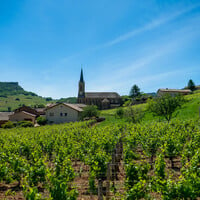
 Cochem, Germany on the Mosel river
Riesling is a genius grape, and Germans traditionally have made the world's finest. There was a time within my memory when German wine was on every wine list because it was a classic, ideal wine to accompany so many dishes, from seafood to poultry to pork. Anything with a little sweetness on the plate found a semi-sweet Riesling to make a delicious pairing. Today sommeliers recommend sweeter Riesling with Asian food.
Interestingly, until the California wine boom took hold in the 1980s and 90s, German wine demand and prices were on par with, and often exceeded, the elite wines of Bordeaux. Such was the esteem held by connoisseurs all the way up to the 1970s. When all eyes seemed to be on California wines during their meteoric rise at the end of the last century, German Rieslings slipped out of fashion as worldwide wine consumers' tastes began to prefer drier wines.
German Riesling producers, making some of the greatest sweet wines in the world, were losing customers even in Germany, as their former clients were turning to dry white wines from places like Chablis and Sancerre. In recent decades, their response has resulted in major changes in German winemaking, establishing bold new rules for making dry wines from their finest vineyards. New classifications were formed like Grosses Gewächs for Grand Cru-quality vineyards, setting up standards for their top dry wines. If you prefer your Rieslings dry, look for the word "trocken" on the label. They are bone dry.
Guide to Natural Ripeness Levels in German Wine
Each wine region has its own requirements for minimum ripeness at different "Prädikat" levels, but it is up to the vintner to determine how sweet to make their wine within those structures.
- Kabinett
- The minimum level of natural ripeness, resulting in lighter-bodied wines, usually with a touch of sweetness, like a green apple.
- Spätlese
- "Late harvest" wine, a bit richer in body and usually, but not always, a tad sweeter than Kabinett, like a red apple.
- Auslese
- Special selection of riper grapes to make sweeter wines with more body.
- Beerenauslese
- Individual shriveled bunches, ideally with botrytis, the "noble rot." It makes very sweet wines.
- Trockenbeerenauslese
- Individual shriveled grapes selected one by one, ideally with botrytis, to make an intensely sweet wine.
- Eiswein
- Very ripe grapes that have been frozen on the vine, which concentrate sugars to make very, very sweet wines, often with a purity not found in other sweet wines.
These were exciting developments in the wine world as young sommeliers discovered wines their grandparents once enjoyed, only with an original twist. Consumers have been slower to explore these new styles of German Riesling. First off, since their finest vineyards are used to make GG wines, prices are often on par with the finer white wines of France which have already been established.
Dry Riesling, while as minerally tasting as Sancerre, Chablis and Champagne, still retains a fruity character which some tasters still equate with sweet wine. Lastly, in the international scheme of things, they are rarer wines, often made in small quantities for a specialized audience. Most wine consumers haven't experienced GG wines and still hold old ideas about what a German Riesling is.
So let's talk a little about what makes German wine still so compelling.
The Virtues of German Wine
Usually grown on slate hillsides in the southwest quadrant of the country, Riesling has demonstrated over the centuries it makes perfectly balanced, shimmering wines in all sweetness levels. Yes, if you like your Rieslings dry, they make them dry (trocken). If you prefer them off-dry, fruity, or honeyed and super-sweet, Germans can grow them, too.

In an era where consumers are increasingly aware of high alcohol in their wines, German Rieslings are the very definition of "moderate consumption", regularly measuring 8% to 11% in alcohol. I recently shared a bottle of 2024 Fritz Haag Brauneberger Juffer Riesling Spatlese that was just 7.5% alcohol, half that of some red wines on our racks.
All of them have impeccable acidity. Not only does Riesling possess more natural acidity than just about any other wine grape on the planet, when grown in the cooler latitudes of the Mosel, Rheingau, Nahe and Pfalz, their acidity is even more enhanced. That not only makes these white wines fresher-tasting than just about any other country's white wines, the inborn acidity gives Riesling the fresh-fruit character you look for in any fresh fruit, be it strawberries, peaches or apples. And grapes are food, after all.
Acidheads love Riesling, and many are drawn to drier versions which can be searing if there is not enough fruit to counteract the razor blades. I personally love my Rieslings with some sweetness in them; they provide the most pleasure for me and a touch of sugar masks a lot of noticeable acidity.
Sweet or dry, German Rieslings offer tastes of apple, peach, sometimes honey, and sometimes other citrus like orange and lime. When older, Rieslings have the capacity to age longer than most red wines, and they can develop much complexity, some tending toward a kind of aroma and flavor often described as "petrol," which is fine for me if it is an accent rather than a dominating characteristic. Nobody drinks diesel oil, after all.
Perhaps it's time to explore the fresh-tasting joy of fine German Riesling. Dine with it, share it with friends. Cook bratwurst, smoked hamhocks, pork loin, duck and chicken and enjoy a bottle of German Riesling with it. Or eat Thai food and do the same!
Attend a German wine seminar at your favorite wine store and sample the gamut of German wine, from bone dry to super sweet and everything in-between. If you're like me, you'll be asking yourselves why you aren't drinking them more often.
Great article about German Riesling. One of my favorite recollections of Riesling was in 1974 and I had just finished college and working at Le Grand Cru in Bixby Knolls and a gentleman who was also an incredible musician named Bill Steck (I think I have the name right) was super knowledgeable about German Riesling especially BA and TBA and he was very generous in sharing his knowledge and collection with us. As you stated those wines were more expensive than the First Growths and the DRC. I had the pleasure to visit many of the top German producers like Egon Muller and Schloss Vollrads with Mr. Mondavi. Still love those wines and wished that consumers were more open minded. Take care.