

The Santa Barbara County Wine Boom, Decades in the Making
- In the Georgia Republic where the Caucasus mountains are, archaeologists discovered residue from wine in clay pots from 8,000 years ago.
- The Greeks domesticated wine vineyards about 4,000 years ago.
- The Romans planted grapevines in France about 2,200 years ago.
- Santa Barbara County's first commercial vineyard, the Nielsen Vineyard, was planted in 1964. That was the same year the Beatles debuted on the Ed Sullivan Show.

In the grand scheme of things, it would appear that, historically speaking anyway, the wine regions in Santa Barbara County are babes by comparison.
As far as Santa Barbara County wine-making goes, Pierre Lafond built Santa Barbara Winery in 1962, buying Zinfandel grapes from Paso Robles. Sanford & Benedict planted their Grand-Cru-quality vineyard in 1971 and built their winery shortly after in a barn on the property. Brooks Firestone built his winery, the county's first estate winery, in 1972. Rancho Sisquoc and Zaca Mesa followed by the mid-1970s.
Zaca Mesa's first winemaker was the legendary Ken Brown who, after co-founding Byron Winery and his own Ken Brown Wines, is celebrating his 50th harvest this year. That is nearly the entirety of winemaking history in Santa Barbara County.

Stumbles and Starts
The early pioneers of Santa Barbara were passionate about wine, but there was no flight plan, no blueprint to help them figure out where to plant and what to plant. Like many wineries in those pre-wine boom years, they planted everything everywhere hoping that somebody might stumble into their tasting room and buy something. Please! Everything from Chardonnay and Pinot Noir to Chenin Blanc, Sauvignon Blanc, Gewürztraminer, Cabernet Sauvignon, Zinfandel and Merlot were planted. Riesling was Firestone's first popular success — and I remember at least two versions offered in various sweetness levels.
Grape vines typically take three years before they bear usable fruit, and several more years for their root systems to fully develop. All too many Santa Barbara winery owners realized perhaps seven years on that their beloved Cabernet Sauvignon smelled like bell peppers and their Sauvignon Blanc like asparagus. How many more years would it take to figure out what grapes would succeed in their corner of the county? Could their bank accounts hold out that long?
Then lightning struck. I recall the region's excitement when Zaca Mesa scored a rave review from Wine Spectator for their 1993 Syrah, earning the #6 spot in the magazine's top 100 wines of the year. Soon after, it seemed like everyone in Santa Barbara County was grafting over to Rhône varieties like Grenache and Roussanne.

The cool region of Santa Maria Valley in the northern part of the county seems to welcome Pinot Noir and Chardonnay more than Cabernet and Sauvignon Blanc. Sanford & Benedict (now Sanford Winery) proved that the cool Sta. Rita Hills region between Buellton and Lompoc also loves Pinot Noir and Chardonnay. In addition to success with these two varieties, Chad Melville discovered several promising Syrah plantings there, and his Riesling, a variety which also loves cool weather, is a well-kept local secret. Sea Smoke Vineyards are in the Sta. Rita Hills along with Sanford Winery. Ken Brown Winery gets most of their fruit from there.
And one of the most exciting developments in Santa Barbara County was the realization that Happy Canyon, located in the eastern edge of the Santa Ynez Valley, was a hotbed for top-quality Cabernet Sauvignon, Merlot and Sauvignon Blanc. It took quite a few years to hone in on this, but Santa Barbara County Cabernet is no longer a joke. There is serious wine coming out of this special region.
What Makes Santa Barbara County Wines So Special?
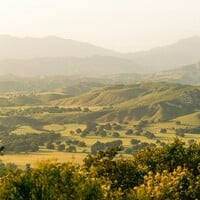
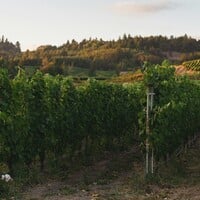
Whether by accident, trial-and-error, scientific calculation, or all three, it is inescapable that the west-east disposition of both major valleys in the Santa Barbara winegrowing region — Santa Ynez Valley and Santa Maria Valley — are unique in California. (Most California mountain ranges and their valleys have a north-south orientation.) Going west-to-east allows the cold and foggy air from the Pacific Ocean to travel eastward through those wind channels, providing grapes with essential acidity while keeping them from overheating and getting too ripe and pruney. Both the Sta. Rita Hills and Santa Maria Valley are cooler growing regions than Napa Valley more than 300 miles to the north.
Over the decades, expert viticulturists have been able to achieve wonderful results with other varieties like Tempranillo and Albariño, Sylvaner, Grenache, Mourvèdre, Grenache Blanc, Roussanne, Marsanne and Viognier, because after 60 years of falling on their faces and getting up again, they pretty much know what to plant and where.
Sideways Didn't Hurt, Either

The improbable hit movie and Best Picture Oscar nominee Sideways came out in 2004 (was it really that long ago?!?) and gave a huge boost in international attention to Santa Barbara County winemaking (not to mention championing Pinot Noir and shoving a coup de grâce into Merlot) that continues to this day. This has allowed a huge amount of investment in vineyards and winery technology, allowing the area's wineries to compete on a global scale.
AVAs Are Busting Out All Over
There are now several American Viticultural Areas (AVAs) within Santa Barbara County, all seemingly offering distinctive wines to be grown within them. I've already mentioned Santa Maria Valley, Santa Ynez Valley, Sta. Rita Hills and Happy Canyon of Santa Barbara County, but there are others: Ballard Canyon, the Los Olivos District, and Alisos Canyon located east of Los Alamos.
Driving up Foxen Canyon Road you not only pass Zaca Mesa winery, you discover both Foxen tasting rooms, Fess Parker Winery and so many more. In Ballard Canyon, Beckmen and Stolpman are making terrific Rhône-inspired wines, and in Los Olivos you can discover many great tasting rooms including Stolpman and Liquid Farm. An industrial park in Buellton is the home of Dragonette. Happy Canyon is the home of Grassini and others. Huge investors like Stan Kroenke, owner of Napa Valley's Screaming Eagle, also owns Jonata and The Hilt located in the heart of the Santa Ynez Valley. Popular tourist stops include Firestone Winery, the Gainey Vineyard and Sauvignon Blanc specialist Brander Vineyards.
The Local Connections & Beyond

Former Long Beach attorney Tom Stolpman and his son Pete own one of the finest vineyards and wineries in Ballard Canyon, Stolpman Vineyards. Lakewood businessman Ron Piazza co-owns the celebrated Mount Carmel Vineyard in the Sta. Rita Hills. Also in Sta. Rita Hills is Bryan Babcock's vineyard and Babcock Winery, whose family also owns Walt's Wharf restaurant in Seal Beach. Local ophthalmologist Leif Herzog and real estate and investment guy Whit Latimore own the Vie Caprice vineyard, providing Grenache to A Tribute to Grace winery. Rusack Vineyards has a Wrigley connection from Santa Catalina Island. And there are more, I'm sure.
The boutique wines of Santa Barbara County are sought after and fought for all over the country. We're so lucky living in Southern California. A 2½ hour drive from Long Beach and you can pull into the Gainey Vineyard parking lot. Further down one road is the Danish enclave of Solvang, down another and you are in the middle of a wine tasting Eden in Los Olivos. It's no wonder so many of our friends and customers love weekending there.
Getting to know Santa Barbara County not only helps you discover some of California's newest, richest and most dynamic wines, getting more familiar with the distinctive sub-regions in such a nearby wine mecca will reveal new worlds of adventure in your wine journey.
As always, thanks for what you do.
See you soon,
Brian